
Why Miami's Climate Should Shape Every Remodeling Decision
If you've lived in Miami for any length of time, you know the humidity is relentless. That thick, warm air that rolls in from the coast doesn't just make your hair frizz — it quietly wreaks havoc on the wrong building materials. Warped cabinets, peeling paint, mold behind walls, and swollen door frames are problems that Miami homeowners know all too well.
When you're planning a kitchen remodel, bathroom renovation, or a full home addition, the materials you choose matter more here than in almost any other city in the country. What works perfectly in Denver or Chicago can fail spectacularly in South Florida's subtropical environment. At Stoneledge ADU Builders Miami, we've seen firsthand what happens when material choices don't account for our unique climate — and we've built our approach around preventing those costly mistakes.
Understanding the Enemy: What Humidity Does to Your Home
Miami's average relative humidity hovers between 73% and 77% year-round, with summer months regularly pushing above 80%. That constant moisture in the air creates several challenges for building materials:
- Wood expansion and contraction: Natural wood absorbs moisture and swells, then shrinks as air conditioning removes humidity indoors. This constant cycle causes warping, cracking, and joint separation.
- Mold and mildew growth: Any organic material in a poorly ventilated space becomes a breeding ground for mold, especially behind walls and under flooring.
- Metal corrosion: Salt air from the coast accelerates rust and oxidation on hardware, fixtures, and structural fasteners.
- Adhesive failure: Some glues and sealants break down faster in high-moisture environments, leading to delamination of countertops, loose tiles, and peeling finishes.
These aren't hypothetical problems. They're the reality of building and remodeling in a tropical coastal city, and they should inform every decision from framing to finish work.
Kitchen Remodeling: Materials That Stand Up to Miami's Air
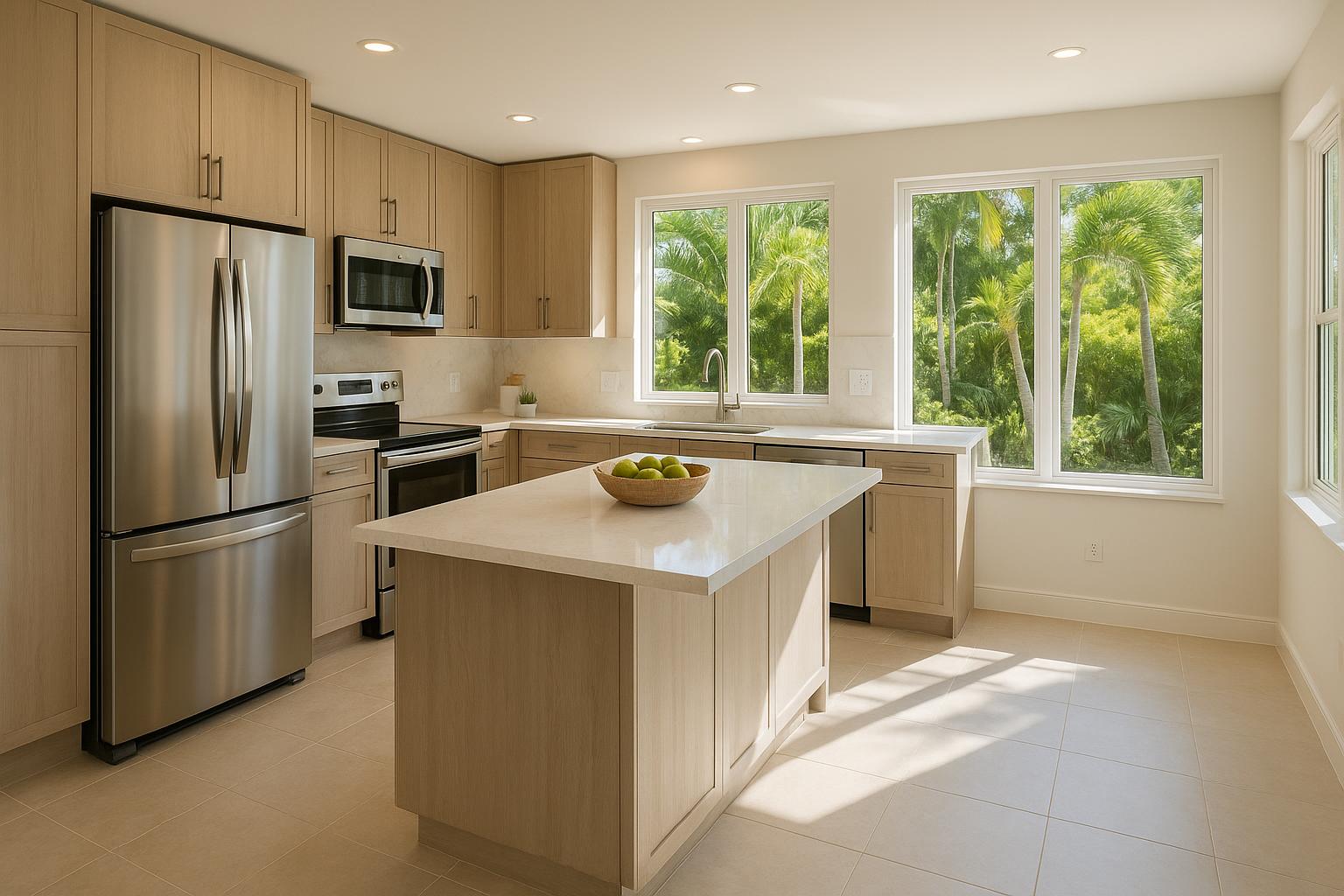
The kitchen is one of the most humidity-sensitive rooms in any home because it generates its own moisture through cooking and dishwashing on top of what's already in the air. Here's what we recommend for Miami kitchens:
Cabinetry
Solid hardwoods like cherry and maple are beautiful, but they're more vulnerable to humidity-driven movement. For Miami homes, we often recommend marine-grade plywood cabinet boxes with hardwood or thermofoil doors. Marine-grade plywood is specifically engineered to resist moisture and is far less likely to warp or delaminate over time. If you prefer a solid wood look, choosing a species like teak or white oak — both naturally moisture-resistant — makes a significant difference.
Countertops
Quartz and porcelain countertops are excellent choices for Miami. Unlike natural stone such as marble or certain granites, engineered quartz is non-porous, meaning it won't absorb moisture or harbor mold. Porcelain slab countertops offer similar benefits with an even wider range of design options. If you love the look of natural stone, make sure it's properly sealed and plan for annual resealing.
Flooring
Skip the traditional hardwood in the kitchen. Porcelain tile, luxury vinyl plank (LVP), and polished concrete are all superior choices for Miami's climate. LVP in particular has become incredibly popular in Kendall and Pinecrest homes because it offers the warmth and look of wood without any of the moisture sensitivity.
Bathroom Remodeling: Where Material Selection Is Critical
Bathrooms combine Miami's ambient humidity with direct water exposure, making them the highest-risk room for material failure. Here's where to focus:
Wall Materials
Always use moisture-resistant drywall (commonly called green board or purple board) in bathroom remodels, and consider cement board behind all tiled surfaces. Standard drywall in a Miami bathroom is a mold problem waiting to happen. For a more premium approach, large-format porcelain wall panels eliminate grout lines and create a virtually waterproof surface.
Fixtures and Hardware
Coastal corrosion is real, even if your home in Cutler Bay or Homestead isn't directly on the water. Choose fixtures made from solid brass, stainless steel, or those with PVD (Physical Vapor Deposition) finishes. PVD-coated fixtures resist tarnishing, scratching, and corrosion far better than standard chrome or brushed nickel options. They cost a bit more upfront but save you from replacing corroded hardware in just a few years.
Ventilation
This isn't technically a material, but it's so important in Miami bathrooms that we include it in every conversation. An appropriately sized exhaust fan — rated for the square footage of your bathroom — is non-negotiable. We recommend fans with humidity sensors that turn on automatically when moisture levels rise. Proper ventilation protects every other material investment you make.
Home Additions and ADUs: Building for the Long Haul
When you're adding square footage to your home or building an accessory dwelling unit, you have the advantage of starting from scratch with climate-appropriate materials throughout the structure. This is where smart planning pays the biggest dividends.
Framing and Structure
Pressure-treated lumber is standard for any wood framing in contact with concrete or close to grade level. For ADU construction in Palmetto Bay and throughout the Miami area, we also pay close attention to vapor barriers and building envelope sealing. A properly sealed structure controls how moisture moves through walls, which protects insulation, prevents mold, and keeps your energy bills manageable.
Insulation
Closed-cell spray foam insulation is the gold standard for Miami construction. It serves as both insulation and a vapor barrier, preventing moisture from condensing inside wall cavities. Open-cell foam and fiberglass batts can absorb moisture and lose their effectiveness in our climate, leading to hidden mold problems that are expensive to remediate.
Exterior Finishes
Stucco remains a popular and effective exterior finish for Miami homes and ADUs, but it must be properly applied with appropriate waterproofing membranes behind it. Fiber cement siding is another excellent option that resists moisture, termites, and salt air. Avoid traditional wood siding unless you're prepared for significant ongoing maintenance.
Windows and Doors: Don't Overlook the Openings
Impact-rated windows and doors are already required by Miami-Dade County building codes for hurricane protection, but material choice still matters for humidity resistance. Vinyl and fiberglass window frames outperform wood frames in our climate because they won't absorb moisture, swell, or rot. Aluminum frames are also common in Miami but should have thermal breaks to prevent condensation.
For exterior doors, fiberglass is the most humidity-resistant option. It won't warp, crack, or swell the way solid wood doors can. If you prefer the look of real wood, consider a fiberglass door with a realistic wood-grain texture — many homeowners in Pinecrest and Kendall are surprised by how convincing modern fiberglass doors look.
The Bottom Line: Plan for Miami, Not for Anywhere Else
Every remodeling project is an investment, and the return on that investment depends heavily on how well your material choices match your environment. What looks great in a showroom or on a home improvement show filmed in California may not hold up to a single Miami summer.
At Stoneledge ADU Builders Miami, we guide our clients through these decisions every day. Whether you're renovating a kitchen in Homestead, adding a bathroom in Cutler Bay, or building a backyard ADU in Palmetto Bay, we help you choose materials that look beautiful now and still perform flawlessly years from now.
If you're planning a remodel and want to make sure your material choices are right for Miami's climate, reach out to our team for a consultation. We'll walk through your project, discuss the options that make sense for your home, and help you build something that truly lasts.